
Why does everyone hate Keir Starmer?
On digital tinnitus.


For some time, I’ve been trying to work out why everyone hates Keir Starmer.
The fact of his unpopularity is undisputed. YouGov put his net favourability rating at negative 46 last month (unchanged from April), having previously been at an historic low of -66. At the May local elections, his Labour party took a drubbing, losing 1,498 council seats. It has precipitated an unedifying leadership race amongst party grandees hoping to be parachuted into Downing Street. All of this has been playing out against a backdrop where slogans like “broken Britain” have become so widely accepted they avoid much scrutiny.
Is Britain broken? Not really. I will concede that progress has felt stagnant, that cost of living inflation has coincided with little wage growth and (slightly) rising unemployment. But these things have largely been caused by exogenous, geopolitical shocks, rather than domestic policy. Where progress has actually regressed, in my opinion, is on social causes – like LGBT rights – which the purveyors of the “broken Britain” maxim tended not to support anyway. And yet, less than 2 years on from Starmer’s landslide victory in the 2024 General Election, his position as Prime Minister appears to be untenable. But not just that: people hate him. Hate him with a visceral loathing that this bland, technocratic lawyer doesn’t deserve. He is reviled in middle-class drawing rooms in the Home Counties and on council estates in Labour’s traditional heartland. Not since Margaret Thatcher has British politics seen a figure attract such varied but focused anger, but, unlike Mrs Thatcher, it is not clear why Keir Starmer deserves it.
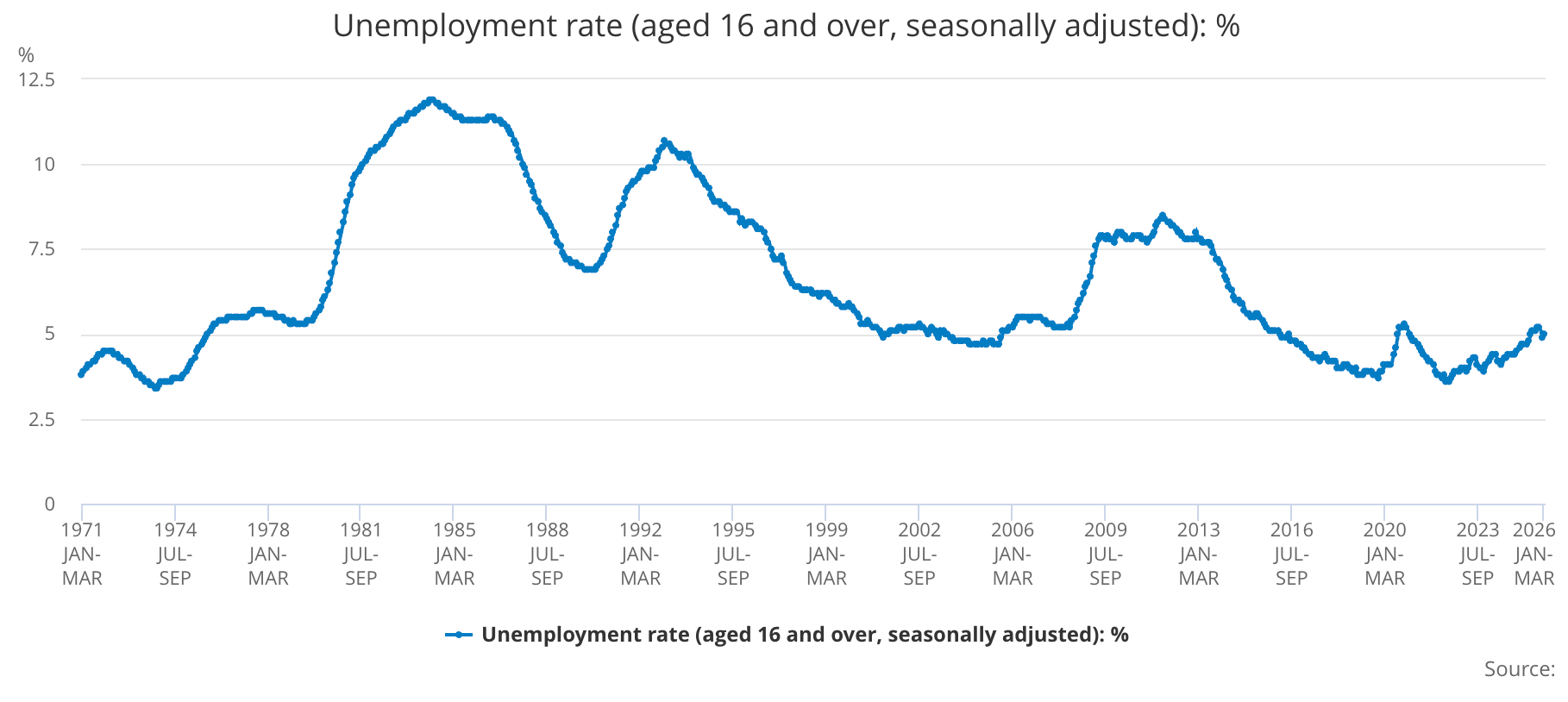
Cost of living has been the big issue in the UK for the past couple of years, and there is a nagging sense (especially amongst younger people) that employment opportunities are drying up. Yet the UK unemployment rate (measured from 16, where some countries measure from 18) is pretty low, and not really rising. Starmer’s Labour party have, in fact, introduced a controversial set of employment reforms specifically designed to alleviate financial pressures on new entrants to the workforce. But the narrative is simple: workers are being squeezed. It’s the same picture economically. The UK recorded a surprise growth in GDP in Q1 (up 0.6% and outperforming other G7 nations). The IMF has upgraded the UK’s growth forecast and yet none of this has done anything to improve Starmer’s popularity or electoral prospects. The narrative, here too, is simple: Britain is broken.
This week, we’ve seen a really horrible story here in the UK, about the murder of a young man Henry Nowak. The 18-year-old was stabbed to death by Vickrum Digwa, using a ceremonial Sikh blade. When police arrived, Digwa claimed he’d been racially abused by Nowak, and the police began the process of arresting the fatally injured man. Bodycam footage from the arresting officers is shocking. Their failure to grasp the extent of Nowak’s injuries has, rightly, caused public outrage. And so the case really has two prongs. On one hand, a violent murder. On the other, another grotesque police blunder. Yet there has been a concerted attempt to turn the story – a heinous outlier that doesn’t seem particularly indicative of a social trend – into an illustration that Britain puts the diversity and inclusion agenda ahead of violence. “Britain’s police are obsessed with DEI,” tweeted Nigel Farage, leader of the right-wing Reform party, shortly after Digwa’s conviction.
DEI is an acronym standing for Diversity, Equality and Inclusion. It is a framework that has been deployed in the United States for a century, but has become an ideological rallying cry in recent years. Amongst some on the alt-right, it is deployed almost as a slur. It is also not a term that we use here in the UK, where similar initiatives are labelled EDI (Equality, Diversity and Inclusion). But Mr Farage is engaging with an online discourse that emanates from the US like nuclear fallout. He knows that Britons who are agonised about their position in the country’s changing social landscape are drawing much of their inspiration from America (and thus using DEI instead of EDI) and he also knows that he is preaching to a broader, amorphous digital congregation. These congregants are all over the world. Some are real, some are bots. Some have genuine personal political concerns, some are agitators for foreign regimes. But what unifies them is the noise. They hover, anonymously, in every quarter of the internet, creating a low hum of discontent. It is a form of digital tinnitus, and it is everywhere.
